Camera Exposure is separated into four different settings, these are Shutter speed, aperture, ISO and White balance.
Shutter Speed
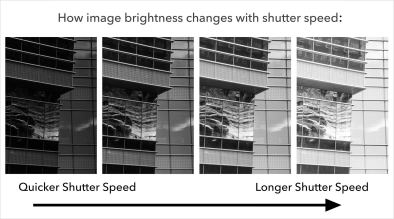
When you take a picture of something the shutter open a expose the film of digital sensor to light and creates the image. Shutter speed is the length of time that the film or digital sensor is expose to the light the amount of light that reach the film or digital sensor is half of the exposure time.
Aperture
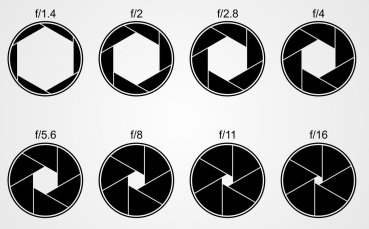
This controls the aperture hole. This can help limit the amount of light that travels through the camera the the size of an aperture is called an f-stop. A lower f-stop equals an larger aperture and an higher f-stop is an smaller aperture. This can be used to increase or decrease amount of light that is reaching the film. This can work in combination with the shutter speed, a fast shutter speed will require a large aperture and a slow shutter speed will need an smaller aperture.
Depth of field
The depth of field is the distance from the plane of focus where the image is notably more sharper but it can only focus on one image at a time so the other objects that are in the frame are out of focus.
ISO
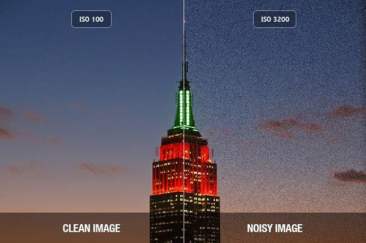
ISO refers to the light sensitivity on film and digital sensor. If you are changing the ISO on a digital camera it renders the camera more or less sensitive to the light with a digital camera you can change the ISO on the fly but in film camera you have to finish the particular roll to change the ISO but the higher the ISO go’s the more noisy the image becomes.
White Balance
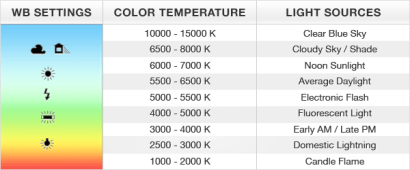
White balance is a setting for the camera that changes the balance of the light to counteract yellow and orange of artificial light. All digital cameras all have an white balance feature on them it analyses all the colours in the picture and neutralizes them.
References
https://photographylife.com/what-is-shutter-speed-in-photography
http://mynomadiclens.com/index.php/2017/08/05/what-is-aperture/
https://www.digitaltrends.com/photography/what-is-iso/
https://www.exposureguide.com/white-balance/



 Neo Blog